
Introduction
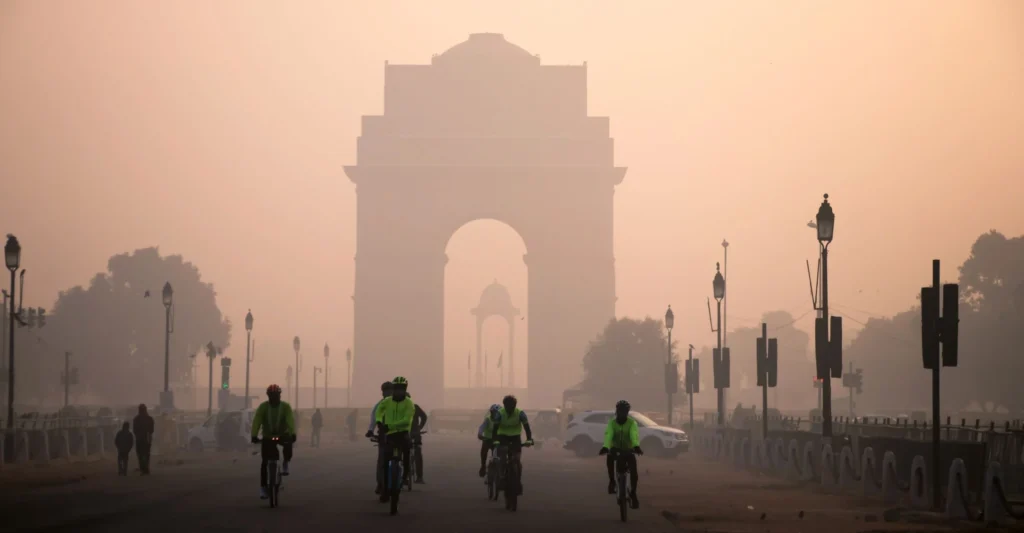
Delhi, India’s capital, is one of the most polluted cities in the world. Each winter, the city is covered in thick smog that makes breathing difficult and puts millions of residents at risk. While government policies and public awareness have grown, the problem remains severe. This article explains the current air quality, seasonal trends, pollution sources, health impacts, and solutions in simple, clear language.
Current Air Quality in Delhi (2025)
Delhi’s air quality has reached hazardous levels in November 2025.
- AQI Readings: Several monitoring stations reported AQI above 450, which is classified as “Severe.”
- Pollutants: PM2.5 and PM10 are the main pollutants, often 10–20 times higher than safe limits.
- Neighboring Cities: Faridabad, Ghaziabad, and Noida recorded even worse AQI values, crossing 500.
Therefore, health advisories urge residents to stay indoors, wear N95 masks, and use air purifiers.
Seasonal and Historical Trends
Delhi’s pollution follows a clear seasonal cycle.
- Winter (Oct–Jan): AQI often exceeds 400 due to stubble burning and cold weather trapping pollutants.
- Summer/Monsoon (Jun–Sep): Rain and wind help clean the air, bringing AQI down to “Moderate.”
- Transitional Months (Mar–May): Dust storms and regional transport cause sudden spikes.
In short, winter remains the most dangerous season for air quality.
Major Sources of Delhi Air Pollution
Delhi’s toxic air comes from both local and regional sources.
Key Drivers
- Vehicles: Over 12 million vehicles emit large amounts of nitrogen oxides and fine particles.
- Stubble Burning: Farmers in Punjab and Haryana burn crop residue, contributing up to 45% of PM2.5 during peak days.
- Construction Dust: Accounts for nearly 40% of PM10 pollution.
- Industries: Factories in NCR release sulfur dioxide and other harmful gases.
Together, these sources create a dangerous mix that worsens every winter.
Health Impacts on Residents
Delhi air pollution is a public health emergency.
- Respiratory Illnesses: Over 68,000 cases of acute respiratory infections were reported in 2024.
- Mortality: Around 8,800 deaths in 2023 were linked to respiratory diseases.
- Other Effects: Pollution is connected to heart disease, dementia, vitamin D deficiency, and bone health problems.
- Vulnerable Groups: Children, older adults, and people with pre-existing conditions face the highest risks.
As a result, hospitals see a sharp rise in admissions during smog season.
Economic and Social Costs
Air pollution also hurts Delhi’s economy.
- Annual Losses: India loses $95 billion each year due to pollution, with Delhi losing up to 6% of its GDP.
- Healthcare Costs: Billions are spent on treating pollution-related illnesses.
- Productivity Loss: Millions of workdays are lost due to sickness and reduced efficiency.
As a result, pollution is not just a health issue but also an economic burden.
Government Policies and Interventions
Graded Response Action Plan (GRAP)
- Stage III (AQI 401–450): Ban construction, restrict polluting vehicles, encourage hybrid schooling.
- Stage IV (>450 AQI): Ban truck entry, close schools, enforce odd-even vehicle rules.
National Clean Air Programme (NCAP)
- Target: 40% reduction in PM2.5 and PM10 by 2026.
Other Measures
- Phasing out old diesel and petrol vehicles.
- Expanding electric vehicle adoption.
- Installing smog towers and anti-smog guns.
- Promoting Pusa Bio-Decomposer to reduce stubble burning.
However, enforcement remains inconsistent, limiting the impact of these policies.
Potential Solutions for Delhi Air Pollution and Way Forward
- Short-Term: Strict GRAP enforcement, expand public transport, and control construction dust.
- Medium-Term: Incentivize EV adoption, regulate industries, and promote crop residue alternatives.
- Long-Term: Regional cooperation across NCR, afforestation, and stronger public awareness campaigns.
Ultimately, solving Delhi’s pollution crisis requires both local action and regional teamwork.
Central Pollution Control Board – AQI Bulletin
Conclusion
Delhi air pollution is a complex problem caused by vehicles, industries, stubble burning, and weather conditions. While policies like GRAP and NCAP have helped, stronger enforcement and regional cooperation are essential. Clean air is not just an environmental goal — it is a public health necessity and an economic imperative for Delhi’s 30 million residents.
Delhi’s winter smog is caused by stubble burning in Punjab & Haryana, temperature inversion, and stagnant winds, which trap pollutants near the ground.
Key sources include vehicular emissions, stubble burning, industrial pollution, construction dust, and waste burning.
Exposure leads to respiratory illnesses, heart disease, reduced lung function, and even neurological risks like dementia. Children and older people are most vulnerable.
Measures include the Graded Response Action Plan (GRAP), National Clean Air Programme (NCAP), stricter vehicle norms (BS‑VI), EV promotion, and dust control initiatives.
Use N95 masks, stay indoors during severe AQI days, install air purifiers, avoid outdoor exercise in mornings, and follow health advisories.
Yes, there have been incremental improvements (more “moderate” AQI days in 2024), but winter smog episodes remain severe, requiring stronger enforcement and regional cooperation.