
Introduction: Beyond the Annual Emergency
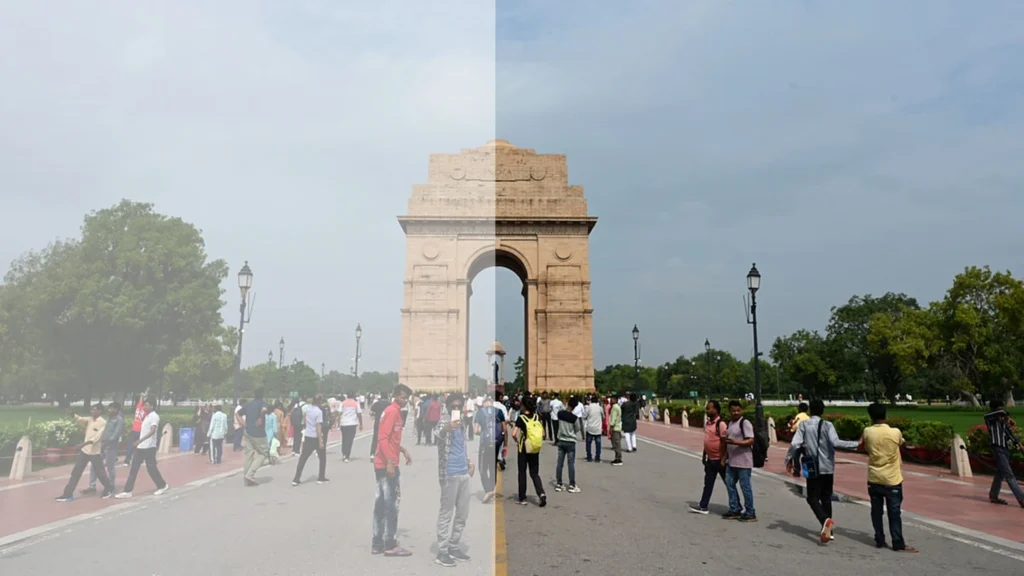
For Delhi’s residents, the arrival of toxic smog each year due to Delhi air pollution crisis is a grimly predictable season. However, this is not just a seasonal event. It is a chronic public health crisis. The city’s air pollution causes millions of premature deaths in India and hurts the economy. This crisis is a policy failure, not a force of nature. This analysis moves beyond emergency reactions. It dissects the systemic failures and offers a clear plan. By learning from global cities like Beijing and London, we can build a framework of effective Delhi air pollution solutions.
Diagnosing the Delhi Crisis: A System of Failures
Solving this problem requires a clear diagnosis. Delhi faces a dual threat: high year-round pollution and dangerous winter spikes. Understanding the sources and policy failures is the first step.
The Dual Threat: Chronic Pollution and Acute Spikes
Delhi’s air quality challenge is two-fold.
- First, the city has a chronically high baseline of pollution. For over a decade, annual PM2.5 levels have remained in the “Very Poor” or “Hazardous” categories. The 2020 lockdown was a telling natural experiment. With fewer cars on the road, pollution dropped, clearly showing the transport sector’s major role.
- Second, acute winter spikes occur between October and January. During this time, the Air Quality Index (AQI) often hits “Severe” levels. These extreme events create a public health emergency, filling hospitals with respiratory cases.
The Primary Culprits: Local and Regional Sources
Studies show Delhi’s toxic air comes from both inside and outside the city.
| Year-Round Local Sources | Acute Seasonal Sources |
|---|---|
| Vehicular Transport (18-39% of PM2.5): Over 12 million vehicles emit constant pollution. | Agricultural Stubble Burning (1-58% of PM2.5): Crop burning in Punjab and Haryana is the main driver of winter smog. |
| Road Dust & Construction (36-66% of PM10): This is the largest source of coarse dust. | Diwali Firecrackers: Cause short-term, dramatic spikes in pollution levels. |
| Industrial Emissions (2-29% of PM2.5): Factories in and around Delhi add to the problem. | Meteorological Conditions: Winter weather traps pollutants near the ground. |
Policy Paralysis: Why Current Interventions Fail
Despite having policies, Delhi’s air remains hazardous due to three key failures.
- The GRAP Paradox: The Graded Response Action Plan (GRAP) often creates new problems. For example, construction bans hurt workers and halt important projects. Similarly, traffic barricades cause jams, increasing emissions from idling cars.
- Weak Implementation of NCAP: The National Clean Air Programme (NCAP) has helped monitor air quality. However, it has failed to drive action on the ground. Fund usage is low, and key goals are unmet.
- Governance Deficits: The biggest failure is a lack of coordination between states on stubble burning. This has led to a crisis of public trust, especially after allegations of data manipulation at monitoring stations. Without trusted data, public alerts and policy are undermined.
These failures show that current Delhi air pollution solutions are not working. We must look to global success stories.
The Global Playbook For Delhi Air Pollution Solutions: Lessons from Cities That Cleared the Smog
Other megacities have beaten air pollution. Their experiences provide a proven playbook for effective action.
Lesson 1: Mandate Coordinated Governance
Strong, coordinated governance is the most critical factor. Beijing’s “War on Pollution,” declared in 2014, is the best example. The Chinese government used a top-down approach, investing heavily and slashing PM2.5 levels by 60% in a decade. Success came from two ideas:
- Accountability: They linked officials’ careers to meeting environmental targets.
- Regional Coordination: A powerful body enforced pollution controls across Beijing and surrounding provinces.
This model directly addresses Delhi’s inter-state coordination failure.
Lesson 2: Implement Technology-Forcing Regulations
Lasting change comes from upgrading pollution sources, not just restricting people. Los Angeles pioneered this. In the 1970s, the California Air Resources Board (CARB) mandated catalytic converters on all new cars. The auto industry protested, but the rule forced them to innovate. This single policy dramatically cut emissions and became a global standard. It shows that mandating cleaner technology is more effective than temporary bans.
Lesson 3: Engineer Systemic Shifts
The best strategies change a city’s core systems.
- London’s Clean Air Act (1956) fixed its lethal smog by shifting homes from coal to cleaner gas and electricity.
- Mexico City fought traffic pollution by massively investing in public transit, like its Metro and bus rapid transit (BRT) system.
- Both cities also mandated cleaner fuels, like low-sulfur diesel.
These structural changes to infrastructure deliver deeper, more lasting benefits than short-term restrictions.
Lesson 4: Deploy Smart Economic Instruments
“Polluter pays” policies can drive change when designed well. Modern London’s Ultra Low Emission Zone (ULEZ) is a great example. It charges drivers of older, polluting vehicles a daily fee to enter the city. This doesn’t ban cars but creates a powerful incentive to switch to cleaner vehicles. Compliance is now over 96%. This is far smarter than Delhi’s odd-even scheme.
These global lessons provide the foundation for a new strategy for Delhi.
A Blueprint for Delhi Air Pollution Solutions: A Four-Point Plan
Based on global successes, here is an integrated, four-part strategy for Delhi air pollution solutions.
Strategy 1 for Delhi air pollution solutions: Forge an “NCR Airshed Compact”
Delhi’s pollution is an airshed problem, not just a city problem. We must strengthen the Commission for Air Quality Management (CAQM) with real power.
- Set Enforceable Targets: The CAQM must have the power to set binding pollution targets for all NCR states.
- Link Funding to Performance: Tie central government funds to each state’s success in meeting these targets.
- Create a Regional Budget: Fund cross-border solutions, especially a viable stubble economy to end farm fires.
Strategy 2 for Delhi air pollution solutions: Target Sources, Not Symptoms
Replace the reactive GRAP with proactive, technology-driven controls.
- Mandate Green Construction: Enforce year-round use of dust suppressants and covered sites. This makes blanket bans unnecessary.
- Build a Stubble Economy: Give farmers subsidies for machinery and create markets to use straw in bioenergy and packaging.
- Enforce Clean Industry: Mandate a switch to natural gas or electricity for NCR industries. Also, require pollution control systems on all nearby power plants.
Strategy 3 for Delhi air pollution solutions: Revolutionize Urban Mobility
Tackle the largest local source with a two-part plan inspired by London and Mexico City.
- Invest Heavily in Public Transport: Drastically expand the fleet of electric and CNG buses. Improve last-mile metro connectivity.
- Implement a “Polluter Pays” Zone: Phase in a London-style ULEZ. Charge the oldest, dirtiest vehicles a fee to enter the city. This incentivizes a shift to cleaner vehicles without outright bans.
Strategy 4 for Delhi air pollution solutions: Restore Data Integrity and Empower Citizens
Trustworthy data is essential for effective policy and public trust.
- Independent Audit: Commission a third-party audit of all air quality monitors to verify their accuracy and restore public confidence.
- Expand Real-Time Data: Grow the monitoring network and use the data for public mobile apps. This gives people hyper-local air quality information and health advice.
Conclusion: The Choice Between Reaction and Resolution
Delhi’s air pollution is a solvable problem. It results from failed governance and reactive policies, not inevitability. The path forward is clear. The city must abandon temporary emergency measures and commit to a long-term, integrated strategy. This means learning from global Delhi air pollution solutions that have worked. Ultimately, this is a choice about the health of millions and the economic future of the capital. The choice is between perpetual reaction and permanent resolution.
Key Citations
Related Articles
- Beijing Air Pollution Crisis: Causes & Reversal
- Tokyo Air Pollution: From Crisis to Clean Air Model
- Mexico City Air Pollution Crisis: From Smog to Recovery
- Comprehensive Analysis on London Air Pollution Crisis
- Los Angeles Air Pollution Crisis: Choking Smog to Cleaner Skies
- Global Air Pollution: A Historical Overview, Current Crisis, Causes and Proven Solutions
- Delhi Air Pollution 2025: Causes, Health Impacts & Solutions